
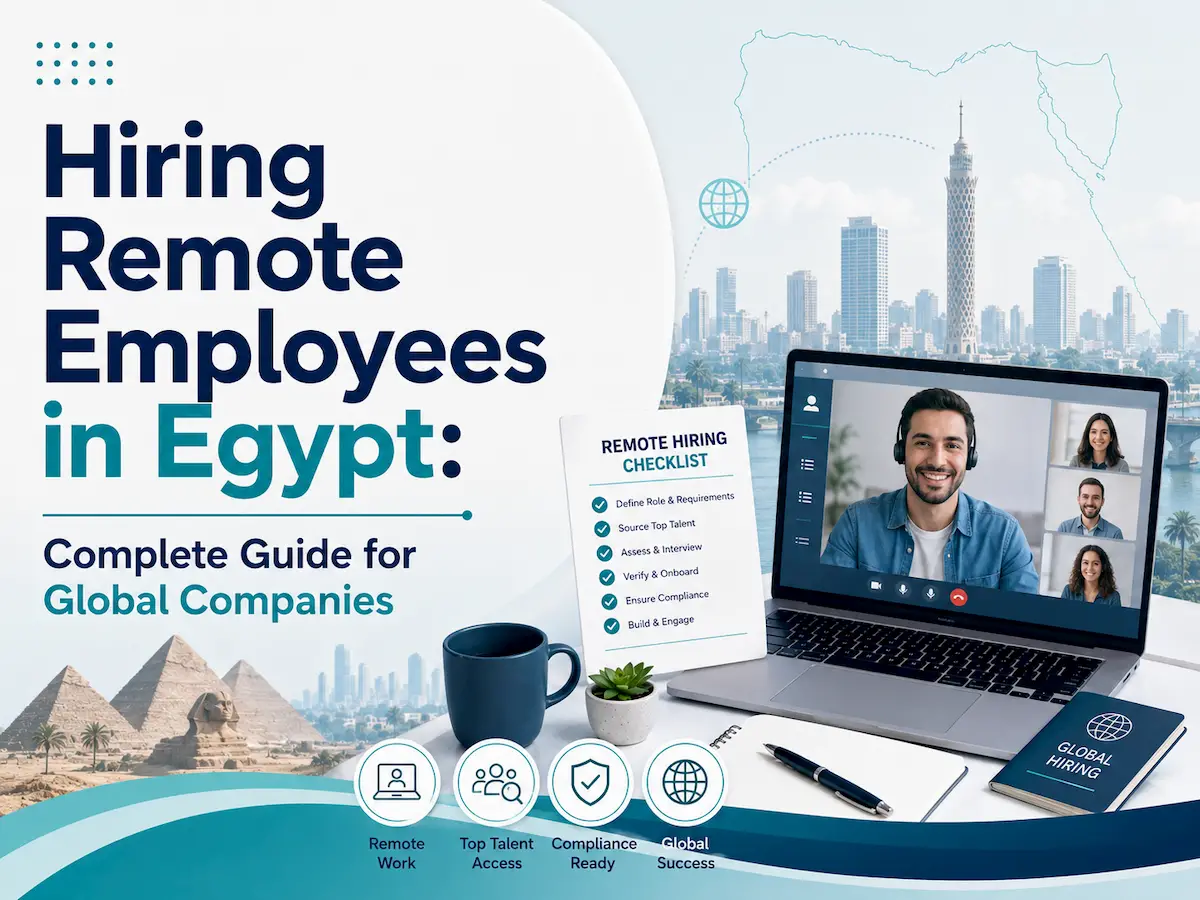
Hiring Remote Employees in Egypt: Complete Guide for Global Companies
Hiring remote employees in Egypt allows global companies to access skilled, multilingual, and cost-effective talent while keeping strong time-zone overlap with Europe, the Gulf, Africa, and parts of Asia. The safest approach is to choose the right hiring model, use compliant employment contracts, manage payroll and social insurance correctly, and provide structured remote onboarding and HR support.
Egypt is one of the most practical remote hiring markets in the Middle East and Africa. International companies hire Egyptian professionals for software development, customer support, finance, digital marketing, engineering support, operations, design, sales development, and business process outsourcing.
But remote hiring is still hiring. A worker based in Egypt does not become compliance-free just because their manager is abroad. Companies need to think carefully about employment structure, payroll, taxes, social insurance, contract terms, data security, onboarding, and employee management.
Begory Advance Hire helps international companies build compliant remote teams through remote hiring Egypt services, recruitment, Employer of Record solutions, payroll, and HR outsourcing.
Quick Answer: How Do You Hire Remote Employees in Egypt?
The best way to hire remote employees in Egypt depends on whether your company already has a local Egyptian entity.
If your company does not have an Egyptian entity, an Employer of Record is often the simplest compliant route. The EOR legally employs the worker in Egypt, manages payroll and employment administration, and lets your company manage the employee’s daily work. If your company already has an entity in Egypt, you can hire directly and outsource payroll, HR administration, or recruitment support.
| Company Situation | Best Hiring Model | Why It Works |
|---|---|---|
| No Egyptian entity | Employer of Record | Lets you employ Egyptian talent without opening a local company. |
| Existing Egyptian entity | Direct employment plus payroll support | Your company employs the worker while local experts manage payroll and HR tasks. |
| Need candidates first | Recruitment support | Helps you source, screen, and shortlist qualified Egyptian professionals. |
| Short project work | Contractor model, reviewed carefully | May fit independent freelance work, but should not disguise employment. |
Why Egypt Is A Strong Market For Remote Hiring
Egypt has become a serious remote hiring destination because it combines talent scale, cost efficiency, language capability, and useful time-zone alignment. For European companies, Egypt provides strong working-day overlap. For Gulf companies, Egypt offers regional familiarity and Arabic-speaking talent. For North American companies, Egypt can support extended service coverage and specialized operational roles.
The market is especially attractive for companies hiring in:
- Software engineering and IT support.
- Customer support and call center operations.
- Finance, accounting, and back-office work.
- Digital marketing and content operations.
- Sales development and business operations.
- Engineering coordination and technical documentation.
- Healthcare administration and medical support roles.
- Hospitality, travel, and multilingual customer service.
- Data processing, QA, and business process outsourcing.
Egypt also has a growing base of professionals who are used to working with international clients. A WTO paper on WTO research on Egypt ICT services discusses Egypt’s development in digitally delivered and technology-enabled services, including ICT and outsourcing activity. That matters because remote hiring works best where talent, infrastructure, and international service delivery habits already exist.

What Makes Egyptian Remote Talent Attractive?
Egyptian remote employees can bring several advantages to international teams.
First, Egypt has a large workforce and a strong graduate pipeline. Employers can find candidates across junior, mid-level, and senior roles.
Second, many Egyptian professionals are comfortable working with regional and global clients, especially in technology, outsourcing, customer service, engineering, finance, and tourism-adjacent sectors.
Third, Egypt’s time zone is practical. Companies in Europe, the Middle East, and Africa can often collaborate with Egyptian employees during normal working hours.
Fourth, Egypt can offer competitive compensation compared with many Western hiring markets. This does not mean employers should underpay talent. It means companies can often build strong teams while maintaining sustainable workforce costs.
Fifth, Egypt offers multilingual capability. Arabic and English are common in professional environments, and some candidates also speak French, German, Italian, Spanish, or other languages depending on education and work history.
Remote Hiring Is Not The Same As Freelance Outsourcing
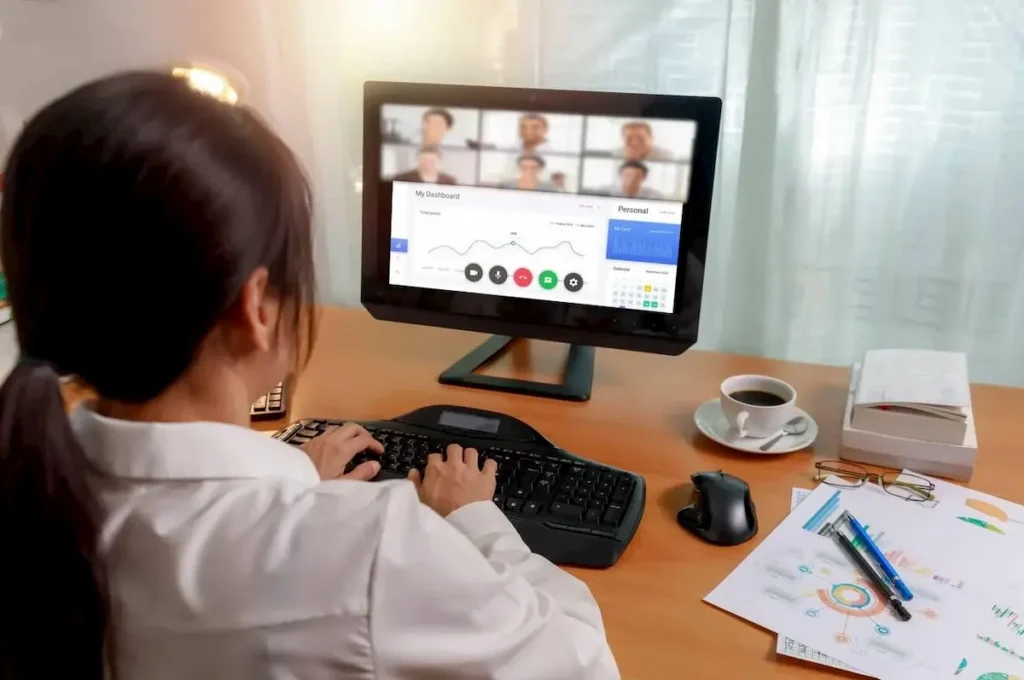
One of the biggest mistakes companies make is treating remote hiring as informal outsourcing. A remote employee is usually part of the company’s team. They may attend internal meetings, use company tools, follow company procedures, report to a manager, work fixed hours, and represent the company to customers.
That is very different from hiring a truly independent freelancer for a short project.
If the person works like an employee, the hiring structure should reflect that. Trying to force a long-term employee-style role into a contractor arrangement can create misclassification risk, employee relations problems, tax concerns, and weak IP or confidentiality protection.
A good remote hiring strategy starts by answering one question: what is the real working relationship?

The Main Ways To Hire Remote Employees In Egypt
There are four common routes for international companies.
1. Hire Through An Employer Of Record In Egypt
An Employer of Record, often called an EOR, is a local employment partner that legally employs workers on behalf of a foreign company. The EOR becomes the legal employer for contract, payroll, tax administration, social insurance workflows, employee records, and HR compliance. The client company manages the employee’s day-to-day work, performance, tools, goals, and team integration.
This is often the best model for companies that do not have a local Egyptian entity.
Begory’s Employer of Record Egypt solution helps international companies hire employees in Egypt without creating a local entity first.
An EOR can be useful when:
- You want to hire your first employee in Egypt.
- You want to test Egypt as a talent market.
- You need to hire quickly.
- You want employees, not contractors.
- You do not have Egyptian payroll or HR infrastructure.
- You want local employment contracts and onboarding handled properly.
- You need support with payroll, social insurance, records, and HR administration.
The EOR model gives international employers a practical balance: local employment structure on one side, operational control on the other.
2. Hire Directly Through Your Own Egyptian Entity
If your company already has a legal entity in Egypt, you can hire remote employees directly. In this model, your company is the legal employer. You are responsible for the employment contract, payroll, deductions, social insurance administration, employee records, leave management, HR policies, and termination process.
Direct hiring can be the right model if Egypt is a long-term operational market for your company. It may also make sense if you plan to hire a large team, open an office, or build a local management structure.
However, direct employment requires local payroll and HR knowledge. Many companies with an Egyptian entity still outsource payroll and HR tasks to reduce risk and administrative workload. Begory’s payroll services in Egypt can support salary processing, payslips, payroll reporting, tax workflows, and employee administration.
3. Use Recruitment Support To Find Egyptian Remote Talent
If your company can already employ workers but needs help finding candidates, recruitment support can speed up the process. Egypt has a large talent pool, but hiring still takes local knowledge. Job boards, salary expectations, candidate communication, screening style, and notice periods may differ from other markets.
Begory helps companies hire Egyptian workers across industries and skill levels.
Recruitment support is useful when:
- You need several candidates quickly.
- You are hiring for a specialized role.
- You need bilingual or multilingual talent.
- You are unfamiliar with Egyptian salary benchmarks.
- You need screening before interviews.
- You want help assessing remote-readiness.
- You need replacement hiring or workforce scaling.
A good recruitment partner should not only send CVs. They should help clarify the role, screen for practical fit, manage candidate communication, and reduce hiring noise.
4. Use Contractors Only For Genuine Independent Work
Some companies hire Egyptian professionals as independent contractors. This can work for genuine freelance projects, advisory tasks, short-term deliverables, or independent consulting work.
However, contractor arrangements should be used carefully. If a person works full time, follows your schedule, reports to your manager, uses your tools, has no real business independence, and performs ongoing core work, the relationship may look more like employment.
Before using a contractor structure for long-term remote work in Egypt, review the arrangement with local counsel or Begory’s compliance team.
EOR Vs Direct Hire Vs Contractor In Egypt
| Model | Best For | Main Advantage | Main Risk |
|---|---|---|---|
| Employer of Record | Companies without an Egyptian entity | Fast compliant employment without entity setup | Requires a reliable EOR partner |
| Direct employment | Companies with an Egyptian entity | Full local employer control | Requires internal HR, payroll, and compliance capability |
| Contractor | Independent project work | Flexible for true freelance arrangements | Misclassification risk if used for employee-style work |
| Recruitment only | Companies that can already employ locally | Better access to candidates | Does not solve payroll or employment structure by itself |
Compliance Considerations When Hiring Remote Employees In Egypt
Remote work does not remove employment obligations. If the worker is employed in Egypt, the company must consider Egyptian employment documentation, payroll administration, employee records, tax withholding, social insurance processes, leave, working arrangements, and termination rules.
Employers should monitor updates from the Egyptian Ministry of Labour and verify current requirements before issuing policies, contracts, or employee communications.
Important compliance areas include:
- Employment contract format and required terms.
- Job title, responsibilities, salary, and benefits.
- Working hours, leave, rest days, and overtime treatment.
- Payroll tax withholding and reporting.
- Social insurance registration and administration.
- Probation, notice, and termination procedures.
- Confidentiality and intellectual property protection.
- Data security and remote work policy.
- Equipment ownership and return process.
- Employee file and document retention.
Compliance note: This article provides general information only. Employment, tax, and social insurance requirements can change. Before hiring remote employees in Egypt, verify details with official Egyptian government sources, qualified legal counsel, or Begory Advance Hire’s compliance team.
Employment Contracts For Remote Employees In Egypt
A remote employee should have a clear employment contract. The contract should identify the legal employer, employee, job title, salary, benefits, working hours, reporting line, leave entitlement, confidentiality obligations, intellectual property terms, termination rules, and remote work conditions.
For remote roles, the contract should also address practical work details.
- Whether the role is fully remote or hybrid.
- Whether the employee works from home, a coworking space, or another approved location.
- Who provides the laptop, phone, software, and work tools.
- Whether the company provides internet or phone allowance.
- Which systems the employee may access.
- How attendance or working time is recorded.
- How leave requests are submitted.
- What happens to company equipment after termination.
- How confidential information must be handled.
The contract should be practical enough for daily work, not only legal enough for filing.
Payroll For Remote Employees In Egypt
Payroll is one of the most sensitive parts of remote hiring. Employees notice payroll errors immediately. Late salary, unclear deductions, missing payslips, or inconsistent payroll communication can quickly damage trust.
For employees in Egypt, payroll may involve salary calculation, payslip generation, tax withholding, social insurance administration, leave inputs, overtime inputs, and employer reporting depending on the employment model.
PwC’s Egypt individual tax administration guidance notes that employment income tax withholding and employer filing obligations are part of Egypt’s salary tax administration framework. Employers should verify current filing obligations with tax professionals or local payroll experts.
A reliable payroll setup should include:
- Complete employee information before start date.
- Signed contract and salary confirmation.
- Defined payroll calendar.
- Gross-to-net calculation process.
- Payslip delivery.
- Tax and social insurance workflows.
- Leave and absence inputs.
- Approval process before salary payment.
- Employee support for payroll questions.
- Secure records and reporting.

Social Insurance And Employment Administration
Social insurance is a core part of employment administration for employees in Egypt. The exact requirements depend on the employment model, employee status, and current rules. Employers should verify registration, contribution, and reporting obligations before onboarding.
Remote work does not automatically remove social insurance considerations. If a person is employed in Egypt, the employer or EOR should handle the required employment administration.
Local HR support can help with employee onboarding documents, employee file setup, social insurance workflows, payroll records, contract records, status changes, leave records, and offboarding documentation.
Recruiting Remote Employees In Egypt
Successful remote recruitment starts with a precise job description. Many companies write vague remote job posts and then wonder why they receive mismatched candidates.
A strong remote job description for Egypt should include:
- Job title and seniority.
- Employment model.
- Whether the role is remote, hybrid, or office-based.
- Required working hours and time-zone overlap.
- Required language level.
- Technical skills and tools.
- Reporting line.
- Interview process.
- Compensation approach.
- Benefits and equipment support.
- Start date.
- Whether hiring is through EOR, direct employment, or another structure.
Remote-readiness should be part of screening. The strongest candidate is not always the best remote candidate. Remote work requires written communication, self-management, documentation habits, comfort with digital tools, and the ability to ask for clarity without waiting passively.
Suggested Remote Hiring Process In Egypt
| Step | Action | Purpose |
|---|---|---|
| 1 | Define the role, hiring model, salary range, and work schedule. | Prevents mismatch before sourcing starts. |
| 2 | Confirm whether you need EOR, direct hire, contractor review, or recruitment only. | Clarifies legal and payroll structure. |
| 3 | Source candidates in Egypt. | Builds a relevant talent pipeline. |
| 4 | Screen for skills, language, experience, and remote-readiness. | Improves candidate quality. |
| 5 | Run interviews and practical assessments. | Confirms technical and team fit. |
| 6 | Prepare offer, contract, payroll, and onboarding documents. | Creates compliant employment setup. |
| 7 | Launch structured onboarding. | Helps the employee become productive faster. |
Onboarding Remote Employees In Egypt
Remote onboarding should be structured, human, and specific. The employee may be based in Cairo, Alexandria, Giza, Mansoura, Tanta, Assiut, or another Egyptian city while the manager sits in London, Dubai, Berlin, Amsterdam, Toronto, or Riyadh.
Without a clear onboarding plan, the employee may not know who handles payroll, where to ask HR questions, how performance is measured, or which communication channel matters most.
A good onboarding plan should include signed employment documents before the first day, payroll setup confirmation, work equipment and system access, company introduction, manager expectations, first-week agenda, first 30-day priorities, communication rules, security training, HR contact details, and payroll contact details.
Managing Remote Employees In Egypt
Managing remote employees in Egypt works best when expectations are written, rhythms are predictable, and communication is intentional.
Managers should define core collaboration hours, weekly meeting rhythm, team meeting schedule, response-time expectations, documentation standards, performance metrics, feedback process, escalation channels, leave request process, and security expectations.
Egyptian remote employees can integrate well into global teams when they receive the same clarity as employees in headquarters. Problems usually appear when companies forget to adapt management habits for distributed work.
Begory’s HR outsourcing in Egypt can support companies that need ongoing HR administration, employee support, leave tracking, records, and local coordination.
Compensation And Benefits For Remote Employees In Egypt
Compensation should reflect the role, experience level, language requirements, industry, and competition for talent. Remote employees working for international companies may have different expectations from local-only roles, especially if they bring strong English, technical skills, or previous international experience.
A competitive package may include monthly salary, clear payment date, statutory benefits under the applicable model, private medical insurance if offered, paid leave, laptop and work tools, internet or phone allowance if appropriate, training budget, performance bonus, annual salary review process, and career development path.
The most important rule is clarity. Employees should understand what is included, what is not included, when salary is paid, how leave works, and who answers compensation questions.
Equipment, Cybersecurity, And Data Protection
Remote employees often access company systems, customer data, source code, financial information, or confidential documents. This makes cybersecurity and equipment management essential.
A remote work policy should explain whether the company provides a laptop, whether personal devices are allowed, password manager requirements, multi-factor authentication, approved software, secure file storage, customer data handling, VPN rules if used, incident reporting, equipment return on exit, and confidentiality obligations.
Common Mistakes When Hiring Remote Employees In Egypt
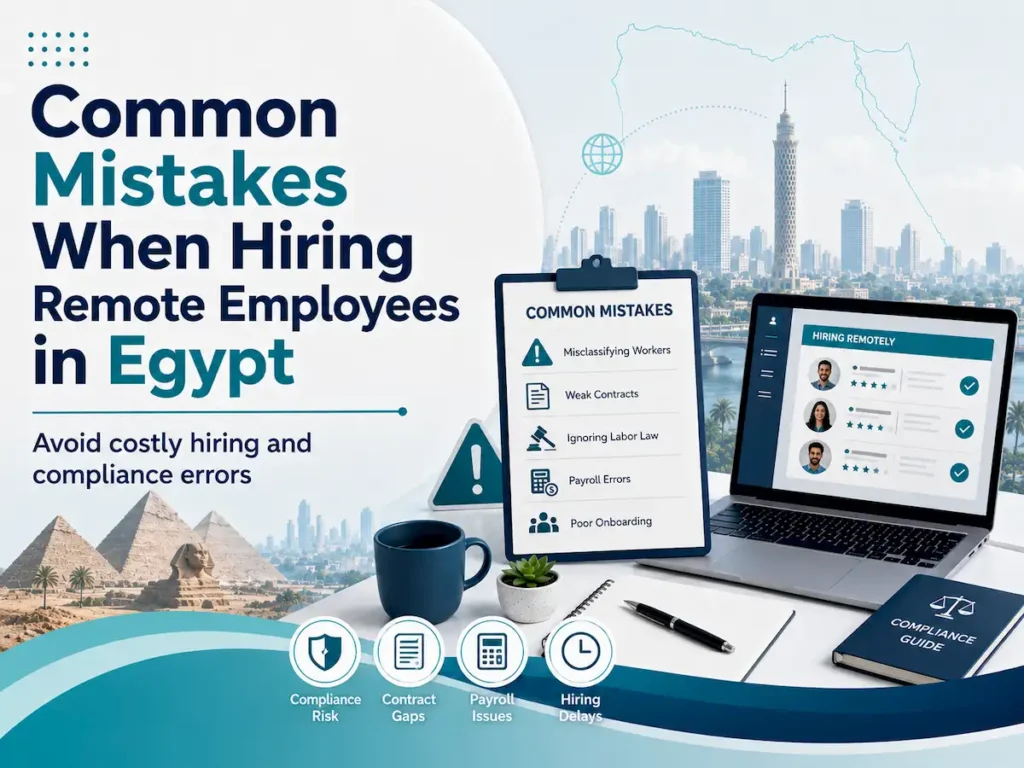
Mistake 1: Starting Work Before The Hiring Model Is Clear
Some companies find a great candidate and rush into work before deciding whether the person is an employee, contractor, EOR employee, or direct hire. This creates avoidable risk. Decide the structure before the start date.
Mistake 2: Using Contractors For Employee-Style Roles
Contractor arrangements may be tempting, but they are not always suitable. If the role is long-term, full-time, supervised, and integrated into the company, employment may be the safer route.
Mistake 3: Treating Payroll As A Simple Transfer
Payroll is more than sending money. It may involve withholding, payslips, statutory administration, records, and reporting. Use local support.
Mistake 4: Using Generic Foreign Contracts
A contract designed for another country may not work well for Egypt. Use locally reviewed documentation.
Mistake 5: Weak Remote Onboarding
Remote employees need more structure than office employees, not less. Give them a clear first week, named contacts, access, documentation, and early feedback.
When Should You Use An Employer Of Record In Egypt?
Use an Employer of Record in Egypt when you want to hire employees in Egypt but do not want to open a local company.
This is common when you are hiring your first Egyptian employee, need to hire quickly, want to test the market, want a compliant employment structure, do not have local payroll capability, need help with contracts and onboarding, want to avoid contractor misclassification risk, or are building a small remote team.
When Should You Open A Local Entity In Egypt?
Opening a local entity may make sense if Egypt becomes a major strategic market for your business. It can be appropriate if you plan to hire a large team, sign local commercial contracts, lease office space, build local management, or run long-term operations.
However, entity setup takes time and requires legal, accounting, tax, payroll, banking, HR, and administrative planning. Many companies start with EOR or outsourced HR support first, then open an entity later when the business case is clear.
Remote Hiring Egypt Checklist
- Have you chosen the right hiring model?
- Do you need EOR, direct employment, contractor review, or recruitment support?
- Is the job description specific enough?
- Have salary, benefits, and working hours been defined?
- Has the contract been reviewed locally?
- Is payroll setup ready?
- Are social insurance requirements understood?
- Is the onboarding plan documented?
- Are IT access and equipment ready?
- Are security policies clear?
- Is there a local HR contact?
- Are compliance details verified with current sources?
How Begory Advance Hire Helps With Remote Hiring In Egypt
Begory Advance Hire supports international companies that want to hire, onboard, pay, and manage remote employees in Egypt.
Begory can help with remote hiring strategy, candidate sourcing, recruitment, Employer of Record employment, payroll processing, employment onboarding, HR outsourcing, employee records, social insurance administration support, local compliance coordination, and remote workforce scaling.
If you are hiring your first employee in Egypt, Begory can help you choose the right structure. If you already have a team, Begory can support payroll and HR operations. If you need talent, Begory can help source and screen candidates.
Conclusion: Build Your Egypt Remote Team The Right Way
Hiring remote employees in Egypt can give global companies access to skilled talent, strong time-zone coverage, multilingual capability, and cost-efficient growth. But success depends on structure.
Choose the right hiring model. Use compliant contracts. Set up payroll correctly. Support the employee with clear onboarding. Manage remote work intentionally. Keep compliance under review.
Begory Advance Hire helps international companies hire remote employees in Egypt through recruitment, EOR, payroll, HR outsourcing, and local workforce support.
-
Previous Post
Employee Contracts in Egypt
-
Next Post
Egypt Labor Law for Foreign Companies
Related Posts
Egypt Labor Law for Foreign Companies
Egypt Labor Law for Foreign Companies: Complete 2026 Employer Guide Egypt Labor Law for Foreign…
Employee Contracts in Egypt
Employee Contracts in Egypt: Complete Employer Guide for 2026 Employee contracts in Egypt should be…
Payroll and Social Insurance in Egypt
Payroll and Social Insurance in Egypt: Complete Employer Guide for 2026 Payroll and Social Insurance…
Egypt Employment Compliance
Egypt Employment Compliance: Complete Guide for Employers in 2026 Egypt employment compliance means hiring, paying,…
